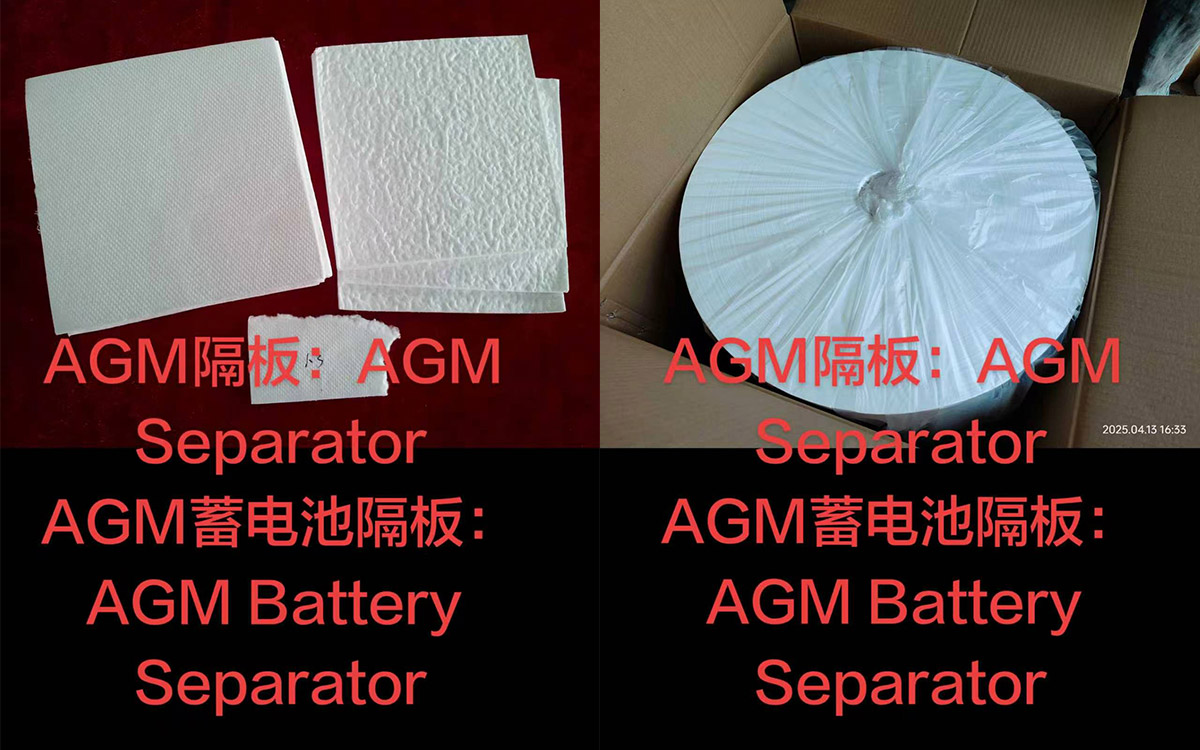
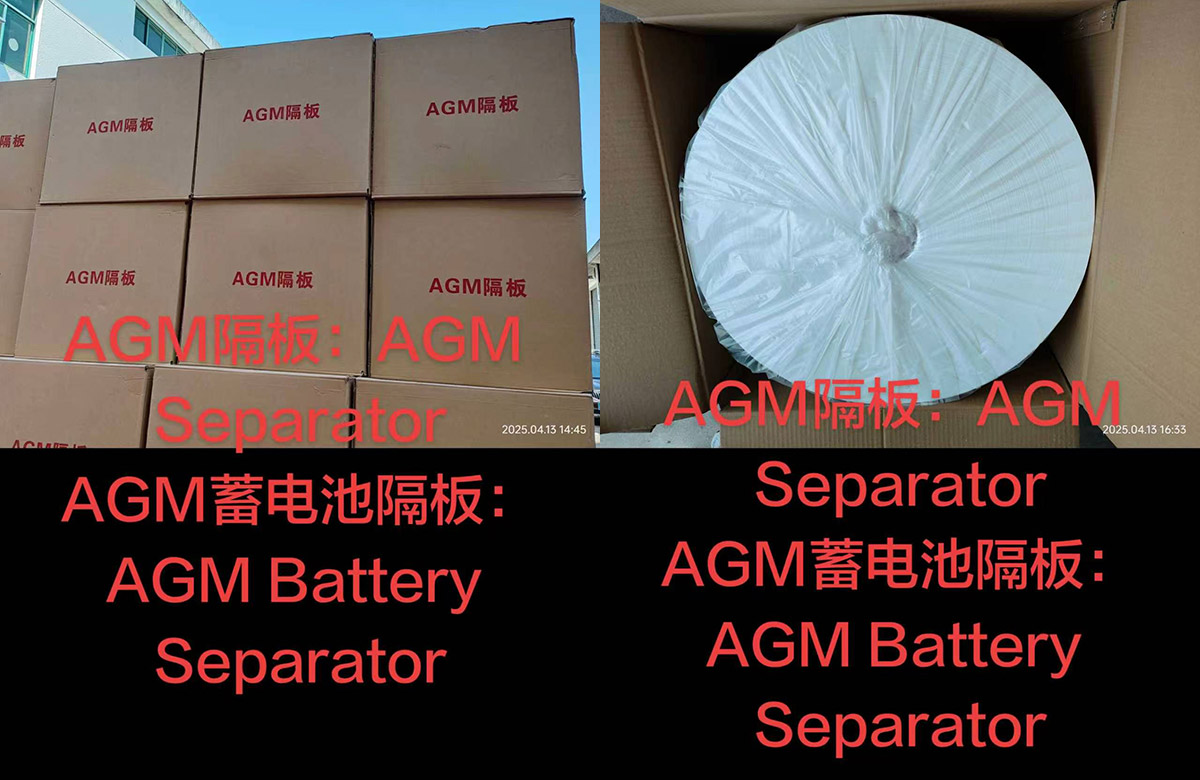
AGM (Absorbent Glass Mat)
1. AGM (Absorbent Glass Mat)
The full English term is Absorbent Glass Mat, and the standard Chinese term is 吸附式玻璃纤维隔板 (adsorptive glass fiber separator). It is the core separation material for lead-acid batteries, manufactured from ultra-fine glass fibers via a wet-laid process. Featuring exceptional electrolyte absorption and retention capabilities, high porosity, and excellent electrical insulation, it effectively isolates the positive and negative plates to prevent short circuits. It is a dedicated core component for maintenance-free lead-acid batteries.
2. AGM Battery Separator
This is an industry-specific designation for the AGM separator, specifically referring to the adsorptive glass fiber separator tailored for the operating conditions of lead-acid batteries. This terminology clearly defines the product's application scenario, distinguishing it from standard glass fiber boards. It is specifically engineered to meet the charging/discharging and sealed maintenance-free requirements of batteries, making it a standard term widely used in the battery manufacturing industry.
3. AGM Glass Fiber Separator
This is a material-based designation for the AGM separator, highlighting its core raw material attributes. It intuitively indicates that the product is made of ultra-fine glass fibers, combining both material characteristics and product categorization. It is exactly the same product as the AGM separator and serves as a common industry synonym, frequently used in raw material labeling and product specification descriptions.
4. Glass Fiber Paper
This is a general, colloquial term for the AGM separator, named after the finished product's appearance as a lightweight, flexible paper-like fiber board. While the broad category of glass fiber paper encompasses a wider range of products, battery-grade glass fiber paper specifically refers to the AGM separator. It is a specialized sub-category tailored for the battery industry, featuring exclusive properties such as liquid absorption and retention, acid and alkali resistance, and corrosion resistance.
Core Performance of AGM Separators
The AGM (Absorbent Glass Mat) separator is the core component of AGM batteries. Its core performance is primarily reflected across multiple dimensions, including physical structure, electrochemical characteristics, and mechanical properties. Specifically, it includes the following aspects:
1. High Porosity and Excellent Electrolyte Absorption Capacity
AGM separators typically feature a porosity of over 90% and possess exceptional capillary absorption and retention capabilities for electrolytes. With an electrolyte saturation level generally around 95%, they can fully absorb and immobilize the electrolyte, keeping the battery in a "starved electrolyte" state. This fundamentally eliminates the risk of leakage and allows the battery to be installed in any orientation (except inverted).
2. Oxygen Recombination Channel Function
After absorbing the electrolyte, the separator retains 5%-10% of its pores as gas channels. These pathways provide a route for oxygen generated at the positive plate to migrate to the negative plate, where it is absorbed and undergoes a recombination reaction (the H₂O-O₂-H₂O cycle). This mechanism achieves a gas recombination efficiency of up to 98%-99%, significantly reducing water loss and enabling the battery to be fully sealed and maintenance-free.
3. Physical Isolation and Short-Circuit Resistance
As an insulating material between the positive and negative plates, the AGM separator effectively prevents internal short circuits and stops the shedding of active material from the positive plate. Meanwhile, its excellent puncture resistance protects against the penetration of plate dendrites, ensuring the safety of the battery during long-term cycling.
4. Good Mechanical Strength and Resilience
To accommodate automated assembly and maintain the tight compression pressure inside the battery, AGM separators require sufficient tensile strength and folding resistance. Furthermore, their high compression resilience ensures that the separator maintains intimate contact with the plates throughout the battery's long-term charge/discharge cycles and under vibration, preventing an increase in internal resistance caused by loosening.
5. Ultra-Low Resistance and High Ionic Conductivity
AGM separators exhibit low electrical resistance, which ensures the smooth transport of ions. This reduces the internal resistance of the battery, thereby enhancing its high-current discharge capability and cranking (starting) performance.
6. Exceptional Chemical Stability and Purity
Manufactured from ultra-fine glass fibers, AGM separators boast excellent acid corrosion resistance, oxidation resistance, and high-temperature stability. Additionally, they contain extremely low levels of impurities (such as harmful ions like iron and chlorine) and have minimal acid-soluble extracts. This effectively prevents impurities from dissolving into the electrolyte, which could otherwise cause self-discharge or plate corrosion, ultimately extending the battery's lifespan.